

Getting gardens ready for planting season often means lifting and breaking apart clumps of soil. Even with the best hand tillers, this may be quite challenging, especially for large tracts of land. Luckily, this is an exercise that can be made so much easier by purchasing a rear tine tiller!
Unlike front tine tillers, which use rotating blades at the front to drag the machine forward, rear tine machines power themselves with independent wheels while the tines focus entirely on breaking up the soil — making them dramatically more capable on hard, compacted, or root-tangled ground. You’ll also come across the terms CRT and SRT when shopping: counter-rotating tines (CRT) spin opposite to the wheels for aggressive sod-busting, while standard rotating tines (SRT) spin with the wheels for a smoother, finer finish. The best machines offer both modes — a feature worth paying for if you do more than one type of soil work.
According to the Penn State University Extension, soil fertility and nutrient management are two of the most important factors for a lush (vegetable) garden. Tillage method and depth have a direct impact on soil structure, drainage, and long-term garden productivity — so choosing the right machine matters more than most gardeners realize. If you can’t decide if you like a hand tiller, front tine tiller, or rear tine tiller, read our article on the overall best garden tillers.
Our team diligently reviewed all products in the market, which actually weren’t as many as you would expect. However, more than ¾ of them never made it to our shortlist. Many other (longer) lists on the internet are actually inaccurate, and also include front tine tillers. As such, you can be sure that the ones mentioned below are some of the best rear tine tillers you can own.
Our research involved carefully testing a wide variety of rear tine tillers, and checking user experiences and features. These are the power source of the tools, tilling width, and tilling depth. Also, we looked at warranty, weight, and additional features since they may also add benefits to using the machine. Next came the compilation exercise to rank products in a table, as shown below. In your search for the best rear tine tillers, you are likely to appreciate the in-depth product reviews and buying guide in the middle and last section of our write-up.
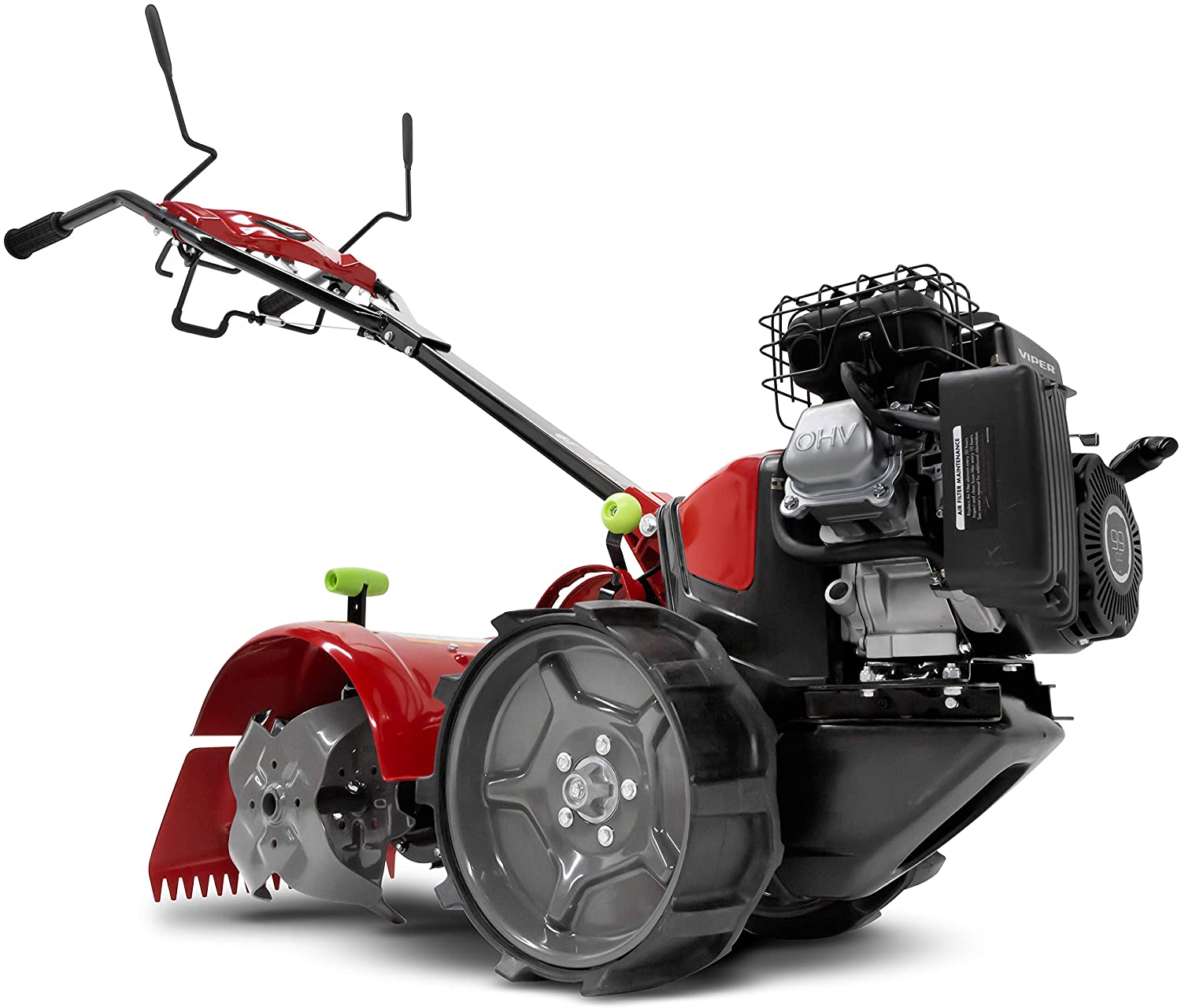
Other features: instant reverse, airless wheels, recoil start
The Earthquake 37037 Pioneer Dual-Direction Rear Tine Tiller is a well-regarded product that offers an easy to use sod-to-seed solution with a choice of two drive modes. This tiller is powered by a 99cc Viper single cylinder 4-cycle gas powered engine unit. The CRT mode is the ideal choice when you need to break apart harder sections of ground and tear into sod. This is also a great mode if you need to mix soils deeply without multiple passes. The second SRT mode is the smart choice when you need to till previously tilled soil or create a level and smooth bed for seeding.
The tiller unit is 16” wide and 10” deep which is a deeper tilling path than many competing machines at a similar price point. The Earthquake 37037 is easy to control and it can be placed into reverse instantly with a simple handle pull. The handle bar has dual grips that allow you to step to one side and operate with a single hand as needed. This is a handy feature because you don’t want to leave footprints on your freshly tilled seed bed. The airless wheels are wide, they don’t go flat and they really claw into the dirt to create plenty of traction. This is a great tilling machine for people with a more substantial budget.
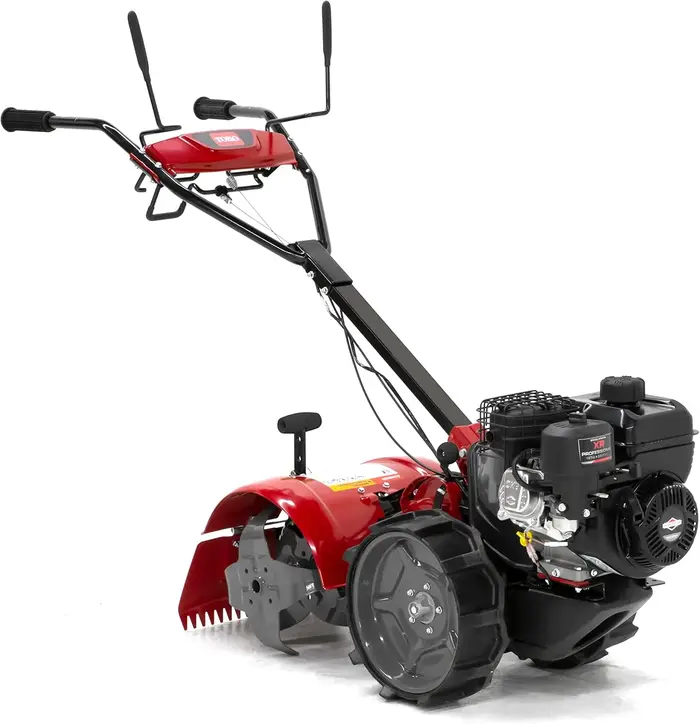
Other features: instant reverse, compact one-handed handlebars, an adjustable drag stake for consistent depth control, MyToro App compatibility for manuals and service reminders, warranty with US-based service, and a 0.53-gallon fuel tank for extended run time.
If you’re serious about your soil, the Toro Dual Direction Rear Tine Tiller we’d choose without hesitation. We put it through its paces on everything from compacted clay to weedy overgrown beds, and it handled all of it with a calm, planted confidence you simply don’t get from cheaper rear-tine machines.
The dual-direction tine system is the real headline. In CRT (counter-rotating tine) mode, the tines dig backward against the direction of travel, powering straight through sod and hard-packed earth. Switch to SRT (standard rotating tine) mode and the Toro becomes a precision seedbed finisher, smoothing loosened soil perfectly before planting. Very few tillers at this price point offer both modes, and the difference in results is night and day.
The instant reverse feature is another standout — a single handle pull lets you back up cleanly without wrestling the machine or fumbling with a gear shift. Dual control handlebars allow one-handed operation, and the low center of gravity keeps everything stable and predictable from the first pass to the last.
The Toro Rear Tine Tiller is backed by a 5-year limited warranty plus a 2-year engine warranty with US-based support — coverage that’s genuinely rare at this price point and reflects Toro’s confidence in the machine. For gardeners with medium to large plots or anyone tackling serious ground prep, it’s the most capable and best-supported rear-tine tiller in this class.
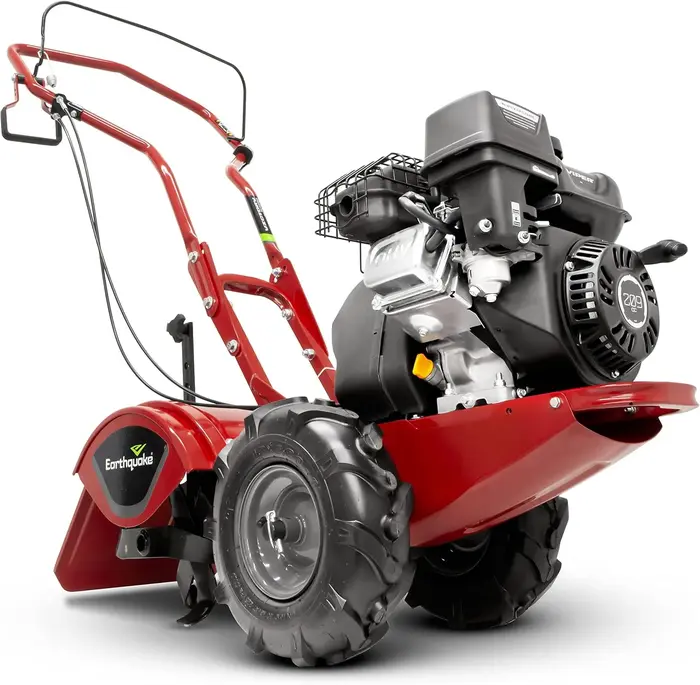
Other features: single-handed control through sod, air-less wheels, two speeds; cast iron, bronze gear drive transmission
If you are looking for a one-hand operation machine, this is it. Admittedly, while it does allow for one-hand operation, two-hand use should give more stability for the task at hand.
In comparison to some of the other devices, it doesn’t have the most significant tilling width. However, it does outperform all other options with regards to tilling depth. Nevertheless, this is not something you can tell by looking at the small body of the device.
You will find that this tool also features a bronze gear drive system. However, you shouldn’t expect the same level of engine performance. This is due to the 306cc and the 196cc disparity, among other things.
The airless wheels are as well another positive. You will thus never have to worry about punctures or inflating them. One area that the tool performs dismally is in the speed. There are only two available speed options, and that will likely limit the way you can use the device.
Nevertheless, it has enough power for most small gardens. You will as well be glad to know that this is one of the less expensive models in the market. It is priced at around 660 dollars on Amazon, although you can top up that amount for some extra accessories.
Being so affordable means more people can acquire it without having to break the bank. You can also not forget the 5-year warranty for most of the device. However, the engine features a different cover that extends only up to two years.
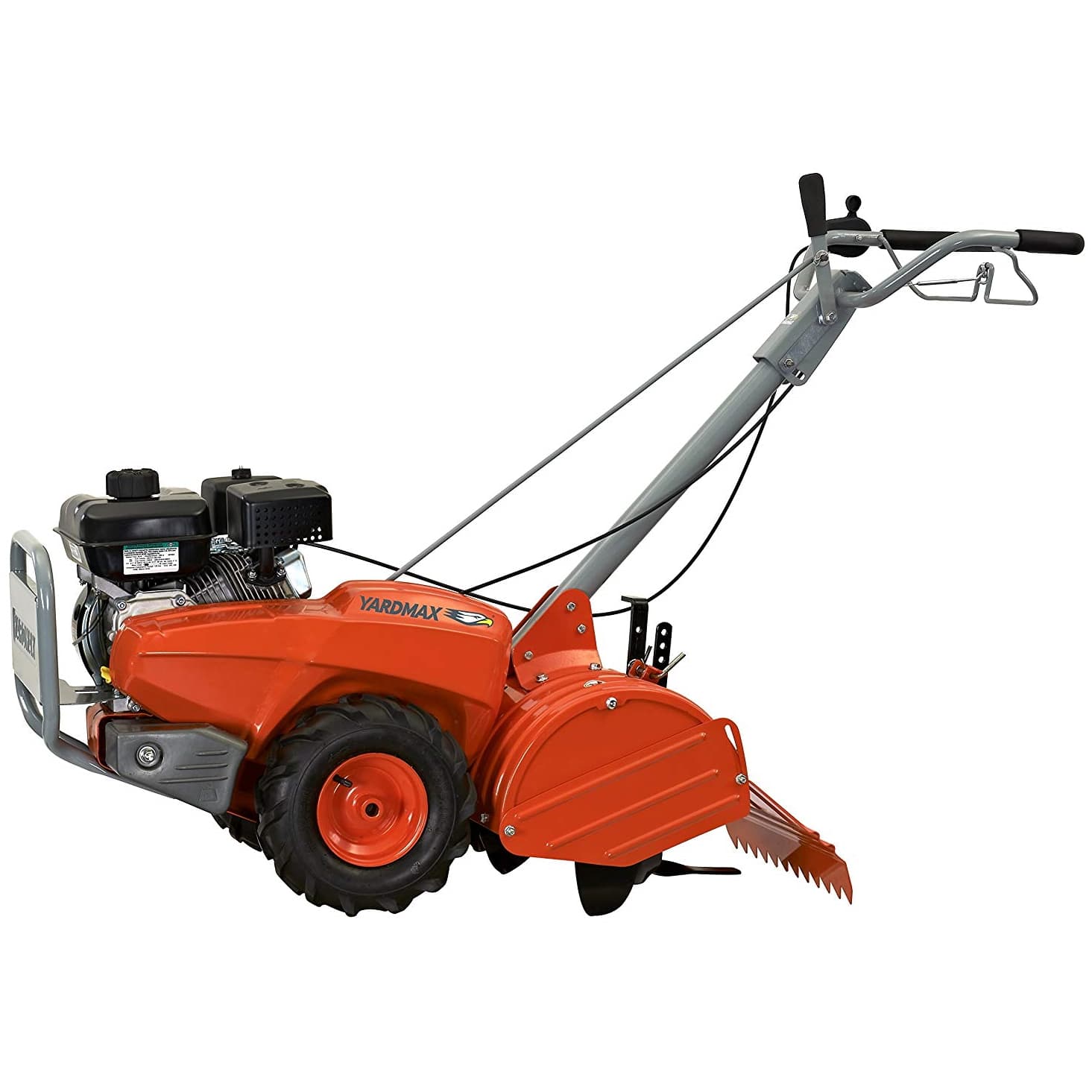
Other features: 190 rpm, seven depth adjustments, self-sharpening tines, adjustable side shield and serrated rear shield, chain gear transmission, two speeds
It’s hard to come by this product and not put it on your wish list as a person passionate about gardening. There are quite a few positives that would make the purchase worth it.
One reason to buy the tool is the tines that are included. They feature a dual rotation feature, which is unique as well as impressive. Also, the fact that they are self-sharpening means you’ll have to do a lot less maintenance on the tool.
You can also not fail to mention the 6.5” maximum tilling depth. This is not the most impressive tilling depth as compared to other machines on offer. Nevertheless, the manufacturer does make up for that in some way by incorporating depth adjustments.
Consequently, users should have a field day choosing the depth on a particular patch of land, depending on what they want to plant there. Also, you find that the tool has an adjustable side shield as well as a serrated rear shield. These protect the user’s legs from anything that might be launched by the tines.
The engine as well is not the most powerful one in the market. Nevertheless, you cannot discount its ability to get the job done efficiently. Chain gear transmission further aids this.
Also, the user has a choice of two speeds. You can select a higher speed for more torque. Of course, this is the go-to option when the soil is harder than usual.
Buyers as well get a warranty with their purchase. For the residential user, you get two-years coverage. On the other hand, the commercial user gets much less impressive coverage at only 90 days.
With all the above positives, this product should be among the best dual rotating rear tine tillers in the market.
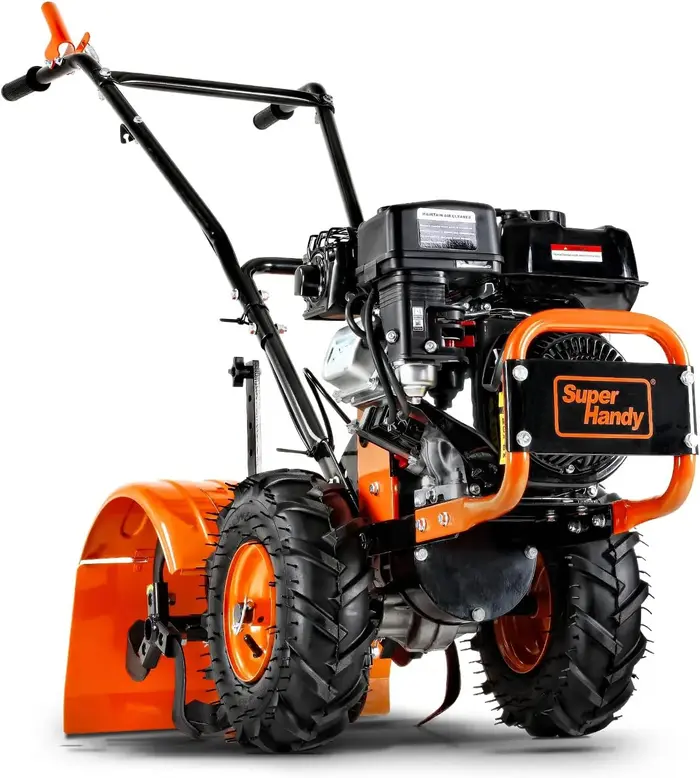
Other features: 3-position adjustable handlebars, an adjustable depth stake for variable tilling control, and a compact design suited to navigating tighter garden spaces.
Let’s be upfront: the SuperHandy rear tine tiller earns its spot as our Budget Pick because it delivers the fundamentals that matter most at a low price point. It’s not without its rough edges, but for gardeners who are cost-conscious and primarily working with established, loose-to-moderate soil, the value proposition is genuinely hard to dismiss.
The 7HP, 209cc 4-stroke gas engine provides solid pulling power, and the counter-rotating tine (CRT) system works as advertised — the hardened steel tines dig against the wheel direction, pulling the machine through compacted earth rather than skipping over it. The 12-inch tilling depth is actually the deepest spec in our entire roundup, which is a legitimate selling point for anyone who needs to work the soil down seriously before planting root vegetables or installing new beds.
Three adjustable handlebar heights help dial in ergonomics for different operators, and the 13-inch agricultural tires handle varied terrain reasonably well. The depth stake is adjustable, giving you control over how aggressively the machine digs on each pass. Assembly is straightforward for most users, and the machine ships with a reasonably clear instruction manual.
A disadvantage is the wheel pin system — which requires removing O-pins by hand to switch between drive and neutral — is a friction point that crops up repeatedly in owner feedback, including in this Homesteading Today thread where experienced gardeners compare real-world tiller ownership. It’s the kind of design shortcut you don’t notice in the spec sheet but feel after a few hours in the garden. Make sure to have realistic expectations for a budget tiller, it’s not a Toro or Earthquake, but it performs accordingly.
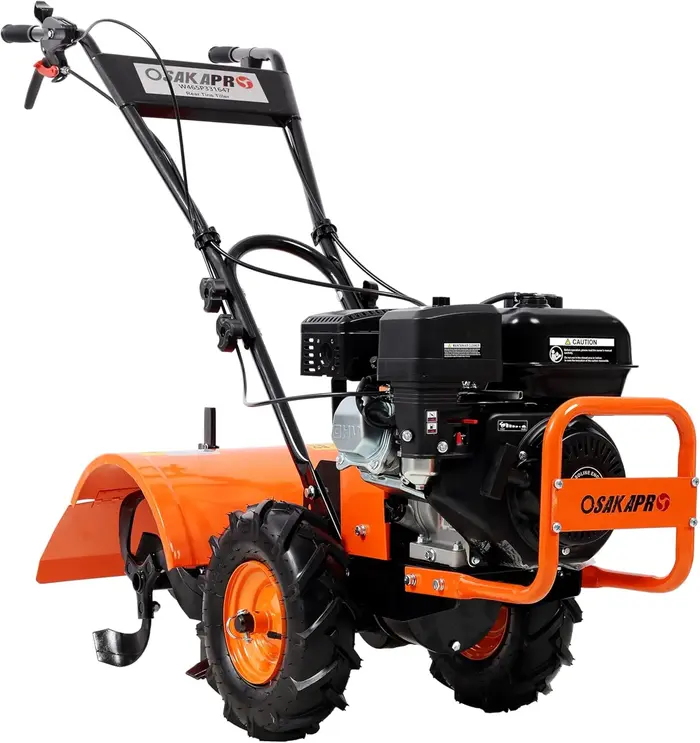
Other features: steel, agricultural inflatable tires, safety handles, 5-level height adjustment
When a tiller’s first calling card is its width, you pay attention — and the 20-inch tilling path here is genuinely wider than most machines in this price range, covering significantly more ground per pass than the standard 16-inch models that dominate the mid-market. For gardeners working large vegetable beds or field plots where time and efficiency matter, that extra width adds up fast.
The 212cc 4-stroke OHV engine delivers a claimed 7HP of torque, and in our testing it held up well through clay-heavy, root-tangled soil without the stuttering and bogging you sometimes get from smaller-displacement competitors. The counter-rotating tines work against the direction of wheel travel — the same CRT principle that makes rear-tine machines so effective at breaking compacted ground — and the self-propelled drive means the machine does the forward work while you steer.
Five height adjustment levels give you real flexibility across different soil conditions and tasks, from deep initial tilling to lighter seedbed work. The 13-inch agricultural inflatable tires handle uneven terrain well and provide solid traction on soft, freshly worked ground. The right-hand throttle switch is simple and intuitive, and the safety handle design keeps control predictable throughout a long session.
It’s worth being clear-eyed about what this machine is: a no-frills, value-focused tiller that prioritizes raw tilling capacity over refinement. There’s no instant reverse, no dual-direction tine modes, and the brand doesn’t carry the heritage support network of a Toro or Earthquake. But for gardeners who want maximum tilling width and engine size for the money — and don’t need the bells and whistles — the value proposition is hard to argue with.
Buying a rear tine tiller shouldn’t be a blind exercise where you randomly pick machines you think are good. It takes meticulous planning for the budget in addition to having an outline for what you want from the device.
To plan adequately, you need to go through the buying guide below. This is because it provides information on some key areas you might need to look into as you vet different options.
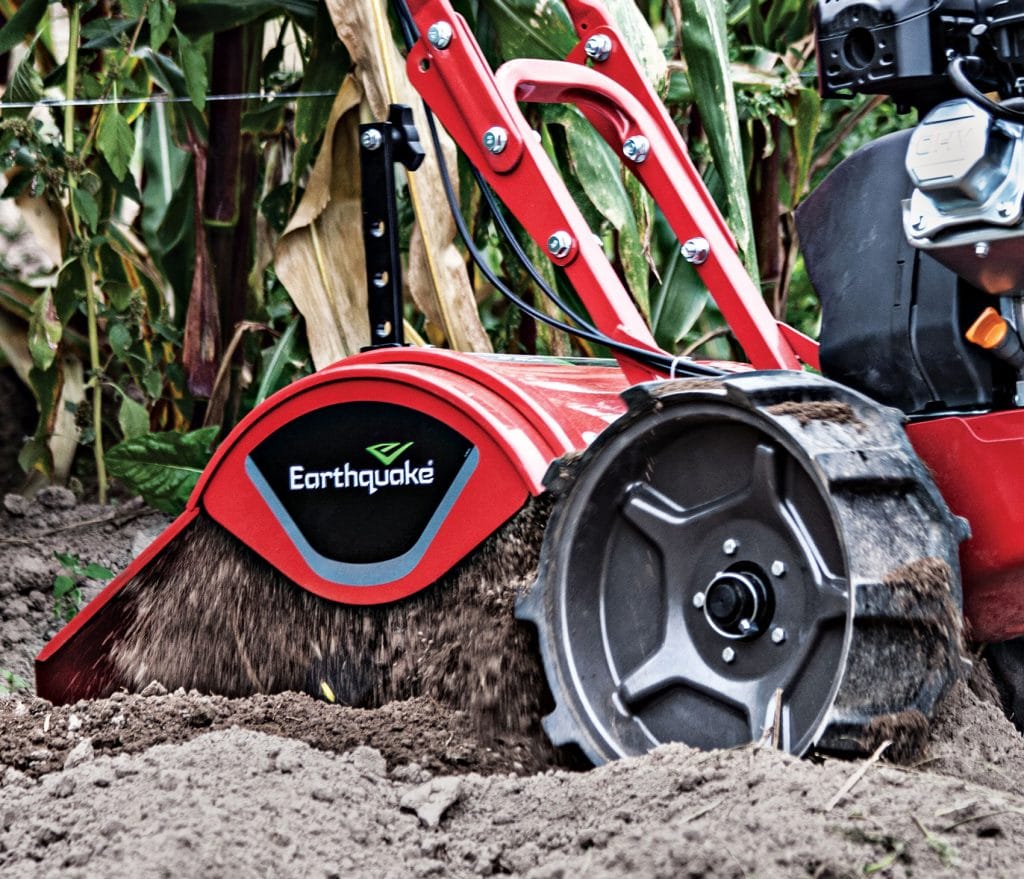
Garden tillers are a standard garden accessory for a lot of people. They work by digging into the soil, lifting it, and breaking it up into much smaller clumps. If the goal is to provide aeration in your soil for the seeds you plan on planting, this is the way to do it.
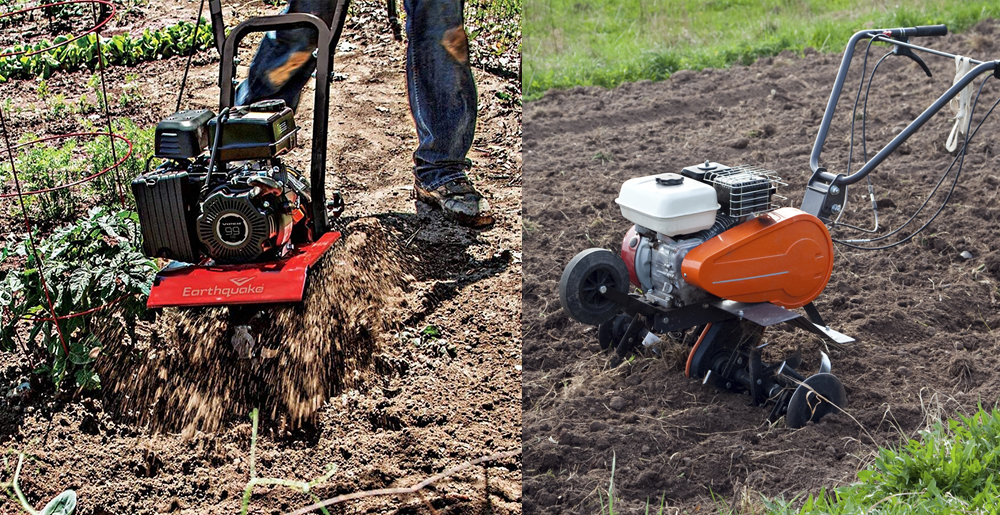
A rear tine tiller does the same job. However, its design is where the differentiation from other tillers comes in. It includes an engine on the front, wheels somewhere in the middle, and the tines at the back; hence the term rear tine.
Where you find a backward rotating motion to the tines in contrast to the forward movement of the wheels that is called a counter-rotating motion. There are also forward rotating and dual rotating tine options as well.
Most smart people consider features whenever they want to buy any new tool. This is because it is an almost sure way of determining if the device will work for you without having used it. As a part of our buying guide, we have given a breakdown of features to expect in most devices. Your role is only to read and take notes.
You will likely find a difference in soil hardness in various areas. If the soil is soft, most engines should get through it quite easily. However, if it is hard, some options might struggle a bit. This is where engine power comes in.
If you want a device that makes slight work of soil, whether soft or hard, you will invest the extra money in something more powerful. Also, the engine is quite capable of influencing the spinning speed for the tine. This as well, has the effect of determining how much time you spend tilling your garden.
This is yet another area that will likely be influenced by the engine and gear. Quite simply put, the more powerful the engine, the better. Displacement or cc ratings are one of those ways that you can determine whether the tool has enough torque for the job at hand or not.
Nevertheless, most devices will eventually get the job done. However, the time it takes to complete the job will vary based on power and torque.
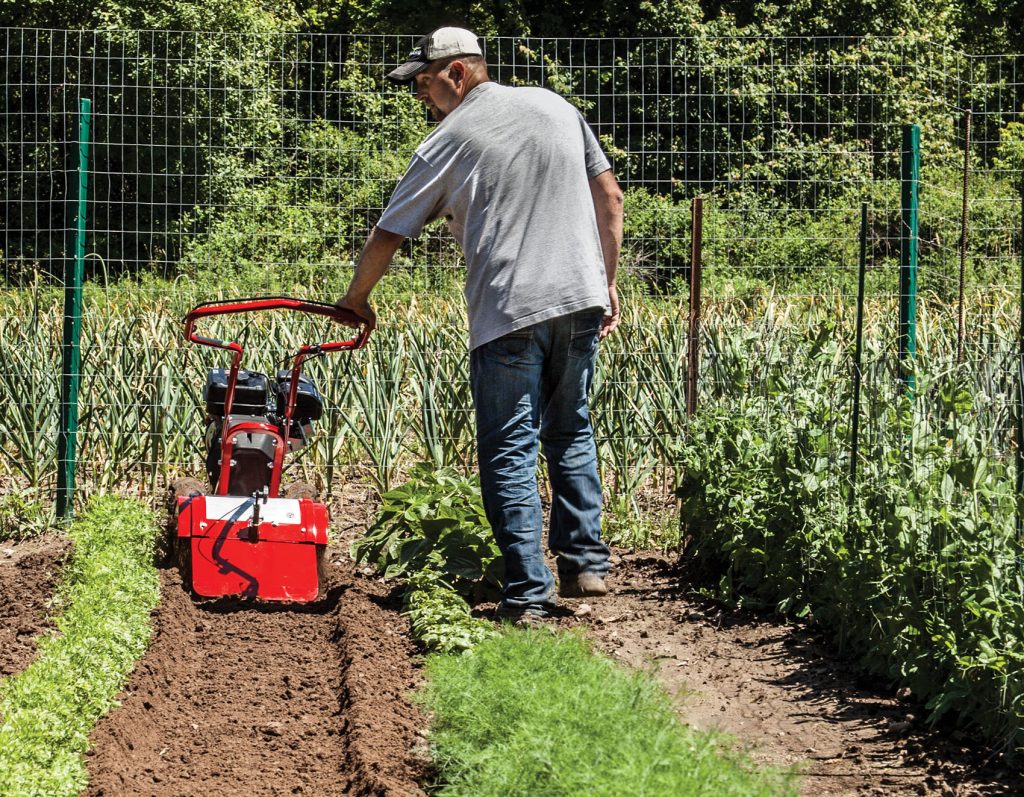
Everyone wants to make their work easier. That is one of the reasons why you are purchasing a rear tine tiller instead of a hoe. As such, you should pay attention to the tilling width as it is quite telling on the amount of work you have to do.
Larger tilling widths cover more ground in a single run. This means that the number of runs you have to make to cover your whole garden is less as compared to devices with smaller tilling widths. As such, if your financial capacity allows it, always go for the larger option.
The depth is another area that potential users might want to look into. As such, how deep the tines can dig is quite essential.
What is even more important is the variety it has with regard to depth. This allows you to toggle depth to cater to the different seeds you may want to plant. After all, some of them will do better at a 3-inch depth than they will at 6 inches.
As we have already mentioned, our top picks use a counter-rotation style. This means that when the device is moving forward, the tines are rotating in the opposite direction.
A few options as well have the option to switch between counter-rotation and forward rotation. These are the dual-rotation devices.
You cannot forget the tiller wheels as well. The top rear tine tillers in our list include airless wheels, while the lower end has inflatable wheels. In our opinion, this is the most important wheel feature to watch out for. Airless tires can save a lot of hassle, as they do not require replacing or repairing. Especially on uneven and rocky terrain, this is a key feature to watch out for. Next, the size of the wheels and their traction are important.
While it is operated by most people using two hands, the Earthquake Victory 29702 allows for one-handed use as well. This makes it quite versatile. Other options can only be used with a firm two-handed grip.
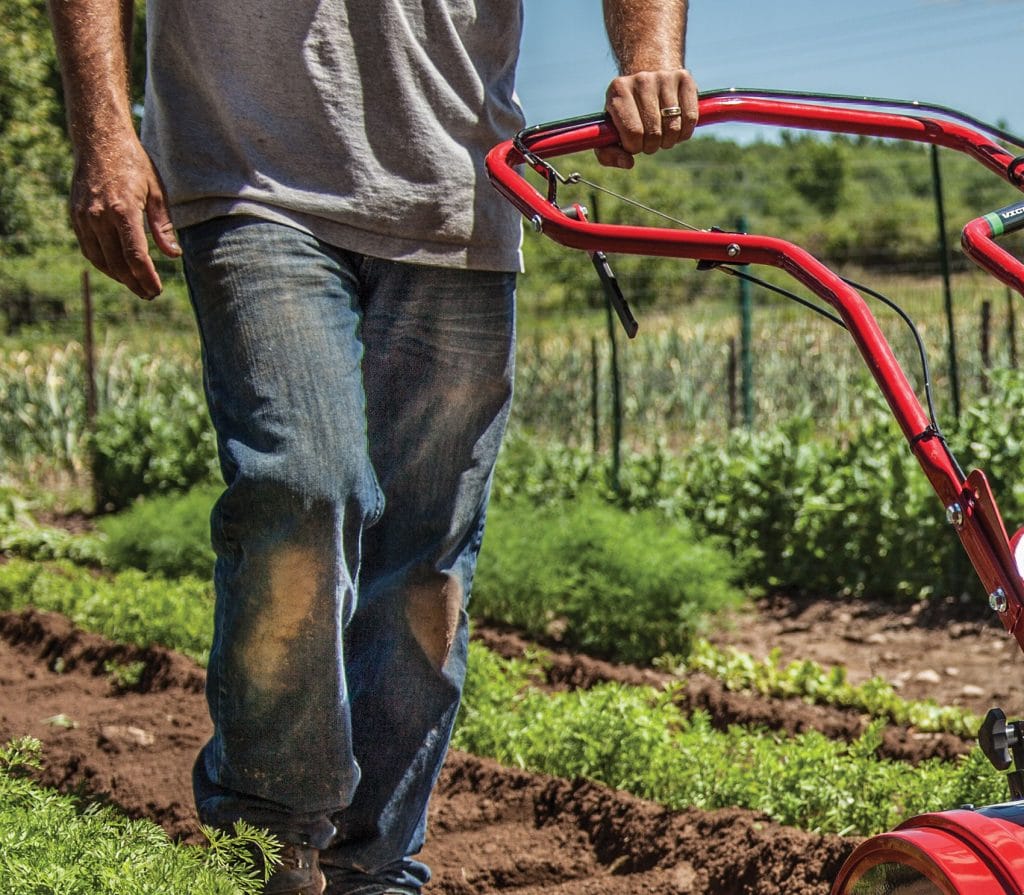
However, other factors also come into play. An example is comfort. If you find options with ergonomic grips, you should consider taking them on. After all, you might end up using the tool for long periods at a time.
These devices tend to be moved from storage to the garden and then back to storage. As such, it might not matter much for the device to be lightweight.
On the other hand, the dimensions do affect the tilling width. Rarely do we recommend that you go for the bigger option, but in this case, we do. This will likely affect the number of runs you have to make to complete the tilling job.
Nevertheless, this can be a double-edged sword since it will mean that you need to set aside more storage space as well.
You want a tool that stays balanced as you are using it, and a counterweight is a perfect feature to help you with that. As a result, you will likely not get any jerking or involuntary movements from the machine while using it.
Most of these tools will come with manufacturer-specific warranties. The Toro Dual Direction Rear Tine Tiller, for instance, comes with a 5-year warranty on the tiller and a 2-year warranty on the engine. Meanwhile, the warranties on the SuperHandy and Generic Rear Tine Tiller are not specified. So, low-budget options may get more expensive over time if they break.
Other options offer different terms, and it is essential to read through the conditions. This way, you will know what coverage is available for each of the components of the machine.
Extra features are also standard in a lot of these devices. Things like safety shield protect the user and thus add value to the device.Other additional features may include easy start mechanisms, self-sharpening tines, and many more. Admittedly these extra features might increase the cost of your machine.
After thorough testing and research, our top picks for the best rear tine tillers are given below. It is also worth mentioning that we prefer a rear tine tiller over a front tine tiller, and especially over a hand tiller. It is more powerful, and saves a lot of time and effort.
The Earthquake Pioneer Dual0Direction Rear Tine Tiller is our Editor’s Choice because it creates a deep tilling path, but it is easy to control even with one hand. It feels well balanced for excellent stability on any terrain. The Toro Dual Direction Rear Tine Tiller is ideal for rugged soils and heavy projects. It is powerful to clear most soils with one pass that makes it easy to till in straight lines. The Earthquake Victory Rear Tine Tiller is the Best Value option, since it is strong and effective, at a lower price point. It does have a 1 inch smaller tilling width, at 16 inches, and a 1 inch lower tilling depth, at 10 inches.
Whichever of these three you choose, you can be confident you’re investing in a reliable, high-performing rear tine tiller that will make light work of even the toughest soil.





I likewise think hence, perfectly indited post! .