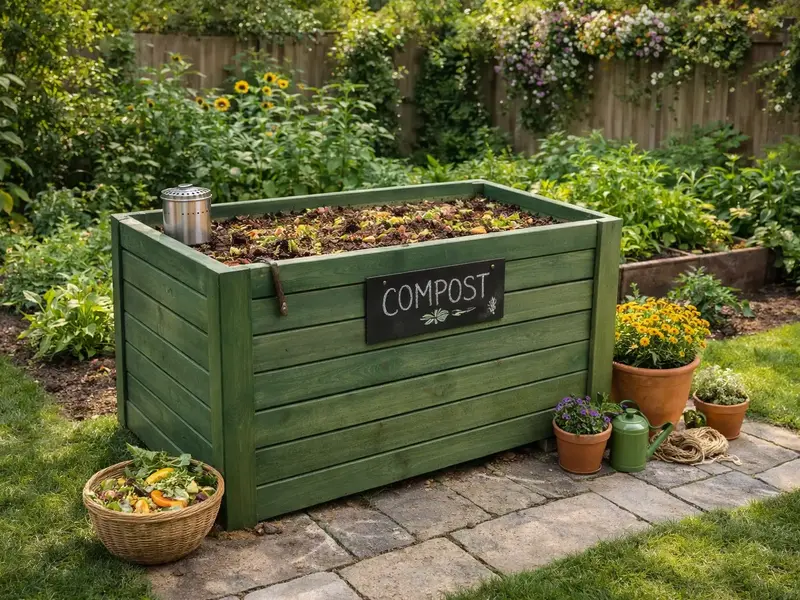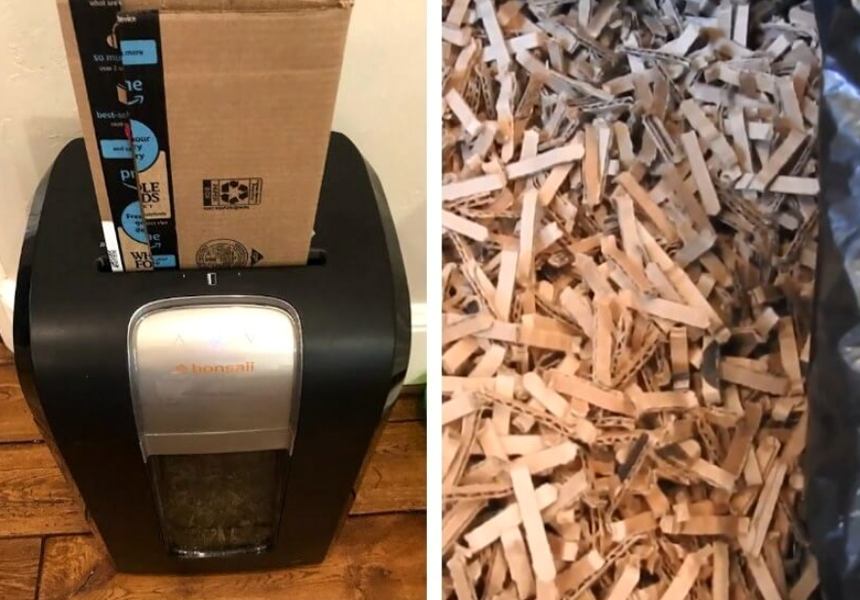

Creating perfect compost for your garden often begins with vermicomposting, which uses worms to break down leftover food scraps, waste, grass, and leaves to create the best compost for your garden. In this review, we’ll take a look at the best worm composters available on the market.
In this deep dive into the best worm composters, we’ll take a look at six of the best products on the market today. We have made our determination on these six after a thorough review of over 20 different worm composters. At the end of the day, we believe that our Editor’s Choice, the VermiHut 5-Tray Worm Compost Bin, is the best vermicomposting bin around thanks to its relatively compact design and flexibility in terms of adding or reducing sections. We’ll also review five other worm composting bins that we think make the cut and are worthy of your attention.
In this article, we evaluated a number of key features of these worm bin composters, including their dimensions, weight, number of sections, and if they have a tea spigot. These traits are all important because it can help you determine where to place this worm composting bin and how much you can effectively put in it. This research took more than 65 hours, and we carefully scanned through official websites of these worm composters as well as the customers’ reviews to give you a clear idea of what you should be looking for. After the detailed reviews of each product, we’ll then turn to our buying guide, where we give more information about worm composters. Let’s get started!
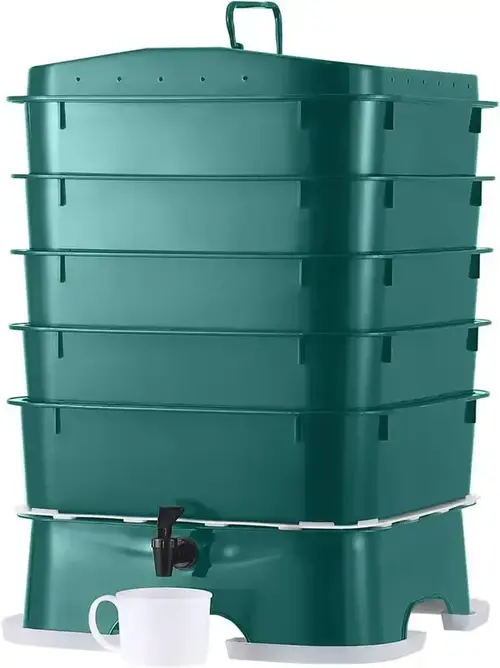
Other features: M-board airflow system, V-board moisture control lid, worm-saver tray, coconut fiber bedding included, fruit fly control via coconut mat, ant-trapper base shoes, indoor and outdoor use, stackable tray design for worm migration
The VermiHut Plus stands out in a crowded worm composter market thanks to a handful of genuinely clever design details that address the most common pain points of vermicomposting. The M-board improves airflow throughout the system, while the V-board in the lid — paired with a coconut fiber mat — retains just the right amount of moisture and keeps odors to a minimum. It’s the kind of thoughtful engineering that makes a real difference once your bin is up and running.
The stackable tray system works intuitively — worms migrate upward naturally as they finish each tray, leaving rich castings behind for easy harvesting with no digging through active worm beds. Liquid worm tea collects in the integrated base tray and drains easily via the included spigot, ready to be diluted and used directly as a powerful liquid fertilizer. The ant-trapper base shoes are a small but practical touch, particularly useful for outdoor placement.
In ideal conditions, the 5-tray system can house up to 10 lbs of worms and process up to 5 lbs of food scraps per day — impressive output for a composter with a very compact 17″ x 17″ footprint. If you’re serious about producing the most nutrient-dense compost possible with minimal effort, this is the bin we’d point you toward first.
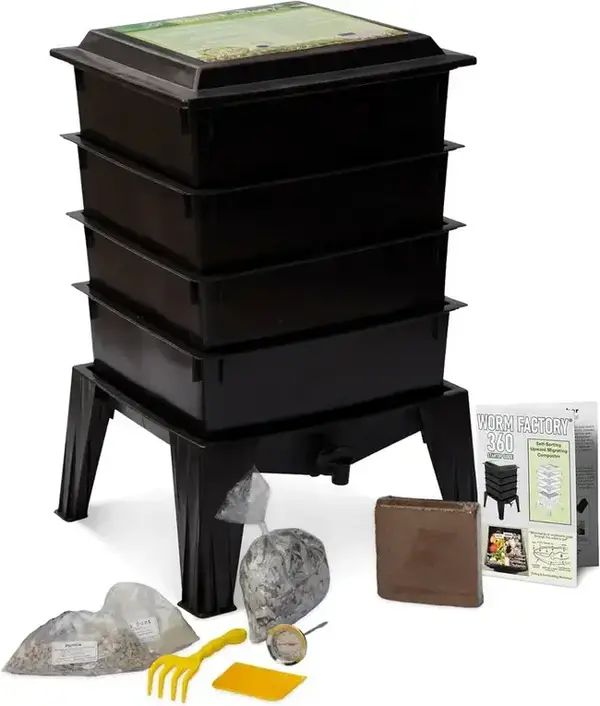
More features: USA-made, durable and space-efficient design, easy assembly
The Worm Factory 360 has been a staple in the vermicomposting world for good reason. Its thermo-siphon airflow design pulls air upward through the stacked trays continuously. This creates an active composting environment that works faster than most traditional methods, and faster than many competing worm bins. In its standard 4-tray form it can house up to 5,000 worms, all working around the clock to convert your kitchen waste into some of the most nutrient-dense compost available.
The stackable tray system is intuitive and low-maintenance. Worms migrate upward naturally as each tray is exhausted, leaving finished castings behind in the lower trays. This means no digging, no sorting, no mess. Moisture filters down through the system as waste breaks down, collecting in the base as liquid fertilizer that drains easily from the spigot. A small but genuinely useful detail is the lid, which doubles as a stand for holding trays during harvest. This kind of practical thinking makes a real difference when you’re actually using the system.
Managing the Worm Factory 360 takes less than 15 minutes a week, and the included instruction manual covers setup, maintenance, and harvesting in detail. The first tray takes about 1–2 months to fully compost, but subsequent trays typically take around a month. At 18″ x 18″ it has one of the smallest footprints of any worm composter at this capacity level, making it a realistic option even for apartments or small indoor spaces.
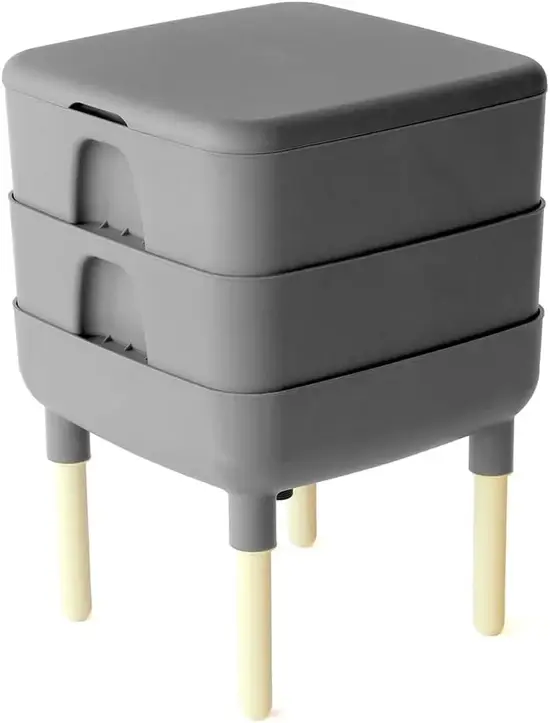
More features: 52 angled migration tunnels between trays, moisture retention channel around each tray, 360° airflow support points, worm tea reservoir base, BPA-free UV-inhibited recycled polypropylene, can be used outdoors and indoors, made in Canada
At first glance, the FCMP Living Composter looks more like a piece of stylish furniture than a worm composter, and that’s purely due to its design as it is meant to blend in with your house seamlessly. Your guests also wouldn’t even know it’s a worm composter because it produces minimal and nearly no odor too.
If we look closer, it is a great worm composter because it is constructed well and is durable. It doesn’t take up much space either as it measures 15” x 15” while weighing only 10 pounds. As you can clearly see, it comes with two sections, and each section retains a good level of moisture for the worms to do their thing.
As one would expect with such a simple-looking worm composter, it is very easy to set up and begin the worm composting process. Simply add your waste under the bedding and begin stacking the sections up. If you plan on buying this worm composter, however, you have to know what you’re doing because it comes with minimal instructions at best.
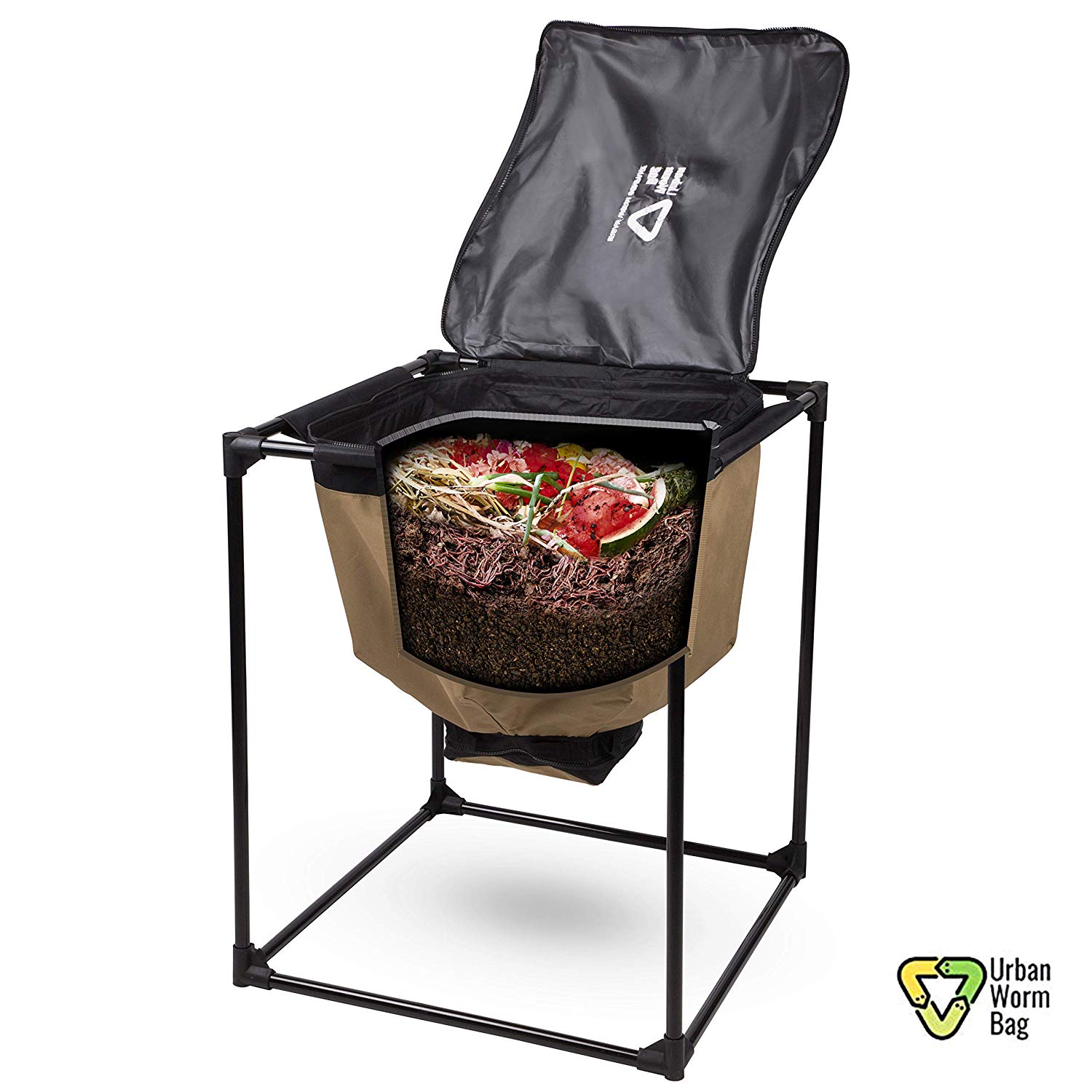
More features: breathable fabric construction, zippers, lifetime warranty
If sorting through the worms in multiple layers isn’t for you, you might want to consider our Best Value choice, the Urban Worm Bag. You’ll eliminate the hassle of separating worms from trays with this unique-looking worm composter.
First of all, this affordable worm composter is very lightweight as it only weighs 8.5 pounds, but it takes up a bit more space with its 27” x 27” construction. Thus, you’re probably better off with leaving this worm composter outside. What’s great about the Urban Worm Bag is that despite not having levels or sections, the ‘bag’ area can still contain up three times the volume of stackable bins.
The bag is made of sturdy 900D Oxford fabric that can easily accommodate up 120 pounds of worm compost. This fabric also helps to keep the compost odor-free. In terms of when you can expect your worm harvest, you’re looking at anywhere between 4-6 months. Setting up and getting started with this worm composter is very easy as well since it takes almost no time to install, and all that is required is you to unzip the top of the bag and toss everything in. You can keep adding to your waste every day, and the worms will naturally move higher and leave their castings below. To harvest the compost, you unzip the bottom of the bag and watch your castings fall out into a bin or container (does not come with the worm composter). This process is much simpler than rearranging the levels or sections with a tower-style composter.
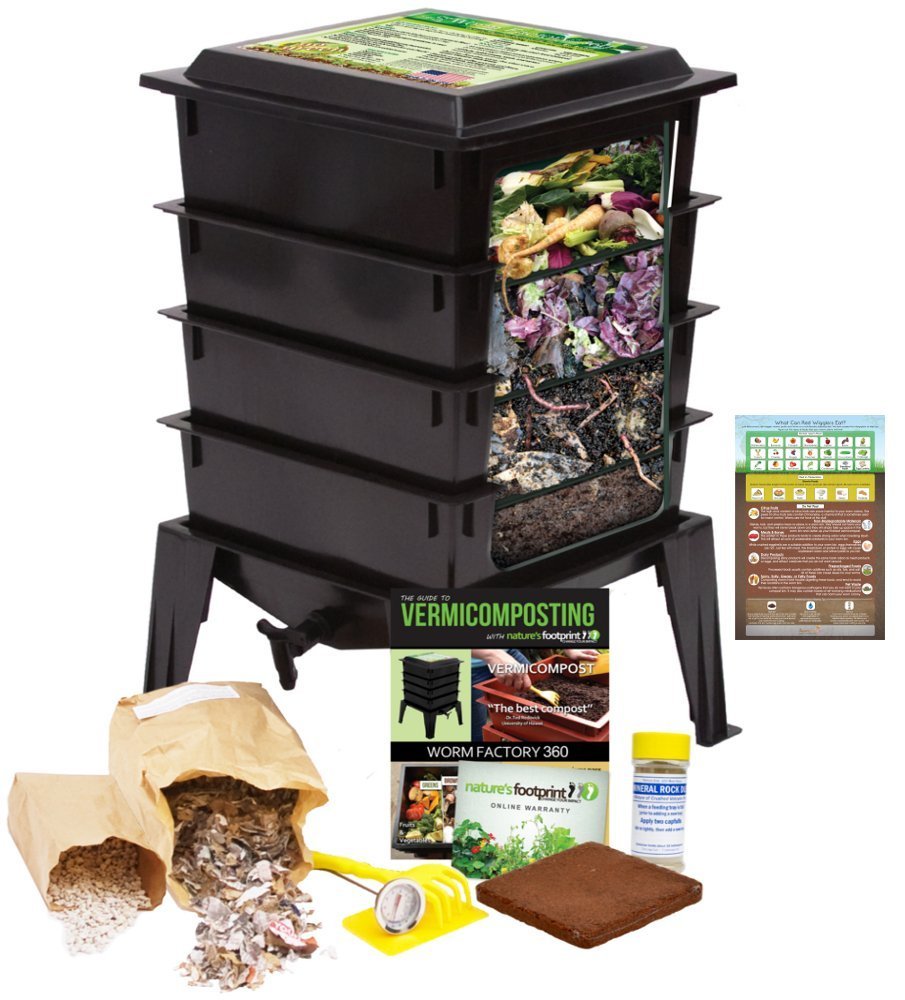
More features: includes infographic refrigerator magnet, instructional manual
The Runner-Up worm composter out there right now is the Squirm Firm Worm Factory 360. There are a number of fantastic features with this worm composter, so let’s dive right in. First, this multi-level worm composter is compact and small enough to be used either indoors or outdoors, as it only measures out to 18” by 18”. Thus, you can use it as a kitchen compost bin if you want close access to it, or you can leave it in your backyard if you please. Just know that this worm composter can often attract fruit flies, and you’ll have to decide whether that bothers you enough not to keep it in your kitchen.
This worm composter is also great because you can add or remove the levels. This process is quite simple, and adding a new layer won’t take up much space. It comes with 4 layers, but you can add up to 8 total sections. At the bottom of the composter, there is a spigot, which helps to collect worm tea. Mix it up with some water and then spread it on your flowers and grass to help them grow faster.
This composter also comes with a handy instruction guide as well as an informative DVD to give you some useful tips. As for the setup of this composter, you can easily install it anywhere you want, but make sure to protect it properly if you plan to use it outside.
After presenting these products to you, we’ll now turn our attention to the buying guide section. As we briefly touched on earlier, vermicomposting uses worms to help break down waste to produce fine compost for your garden. While there are quite a few worm composters to choose from, each has its own unique design and functionality. It ultimately comes down to what kind of worm composter will work best for you. We’ll explore a few key factors below to help you understand a bit more about vermicomposting, and in the end, we’ll give you the answers to some of the most frequently asked questions followed by our three favorite choices.
 In this section, we will touch on the various factors you should think about when picking a worm composter. Some of them include the dimensions of the worm composters, their weight, the number of sections, compost tea spigots, ventilation, and other features. Lastly, we will take a look at the price of the best worm composters to give you an idea of how much you should expect to pay for the product.
The dimensions of the best worm composters can vary between something that takes up little space under the table to something that is a bit bigger and requires to be placed outside. For instance, the smallest worm composter here is FCMP Living Composter as it has the size of 15 inches wide, 15 inches deep, and 22 inches tall. Note that the height of this worm composter can also increase if you add on more sections to it.
On the other hand, the biggest worm composter we saw was the Urban Worm Bag, which is capable of processing more waste at a time. It is 27 inches wide, 27 inches deep, and 32 inches tall.
If you plan to use a compact worm composter indoors, do not worry about bad smells coming from it since most of them are odor-free.
Even if you’ve found a spot for your worm composter where you’re not going to put it anytime soon, weight still can be important. Many worm composters don’t have wheels or handles because they are not designed to be transported around. Fortunately, some composters feature removable sections, which make the whole thing easier. Others will require you to empty out the contents before moving it if they get to heavy.
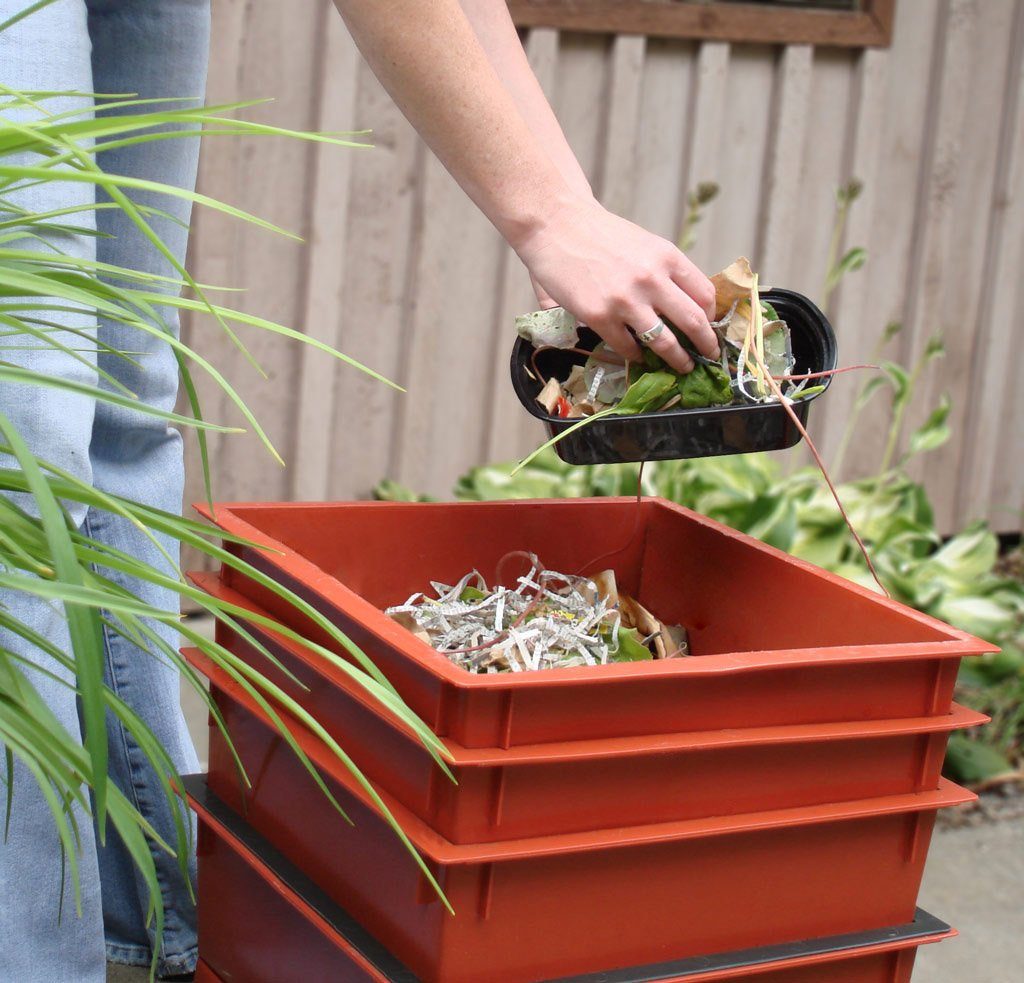 As you can see, the number of sections with worm composters can vary from two to up to five sections. An example of a worm composter with 5 sections is the VermiHut Worm Compost Bin, while the Worm Factory 360 Compost Bin has 4 trays, and the FCMP Living Composter has 2 trays. Most options are quite versatile because sections can be added if you like. Adding on sections is done so vertically, and so it won’t really take up that much extra space. In terms of how many worms you need to fit in these sections, it really depends on the amount of waste you want to process.
A good rule of thumb is that red wiggler composting worms can eat up to half their weight each day.
Lastly, with some of the worm composters, you can even collect worm tea in the bottom section and use the spigot to pour it.
As we just briefly mentioned in the previous section, most of the worm composters have some form of a compost tea brewer feature. The compost tea collected in the bottom section can be poured down with it to a different vessel without any spills or mess. Later, you can mix it with water to fertilize the plants in your garden.
While some worm composters have this tea spigot feature, others come with drain holes. The only issue with them is that it can be harder to pour the tea, and you will have to remove the base to do it.
Finally, we have a type of composters without spigots or drain holes. These can be harder to use, as some occasional spills might occur.
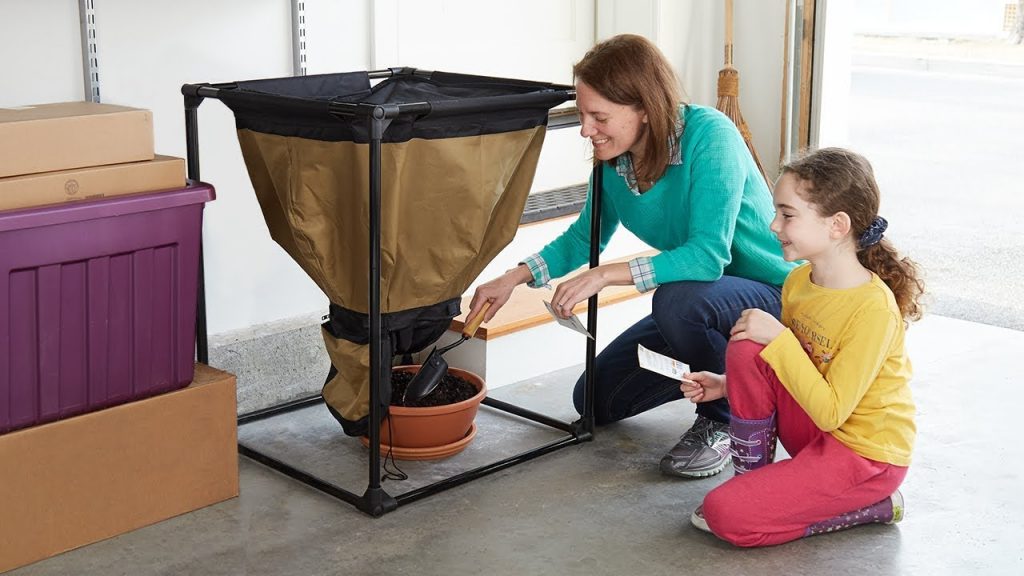 One of the most important aspects to ensure your worms does an effective job breaking down the waste is that there is proper ventilation. Having proper airflow in the worm composter is good for worms because if it is too humid inside, they will not work as efficiently. Luckily, all of the worm composters we reviewed have proper ventilation and airflow. For example, the Urban Worm Bag is made of breathable fabric, and thus, allows fresh air to come inside. Other worm composters the airflow through gets in through each section or special tiny holes.
Some of the worm composters offer extra features as well. With something as nuanced as worm composting, having any kind of extra information or tips on how to do things properly would be helpful, and that’s exactly what the Squirm Firm Worm Factory 360 provides. The instruction manual and DVD it comes with are extremely helpful in getting you started and providing a wealth of great information. It also comes with a very handy infographic refrigerator magnet that you can refer to for quick and helpful tips as well.
Some worm composters are also made with environmentally-friendly, BPA-free materials. For example, that is the case with the FCMP Living Composter.
Like many other products, worm composters can vary greatly in price. It can be quite hard to find out an average price tag for worm composters. To help you get a sense of the prices, we’ve broken them down into three categories: low, medium, and high.
The budget-friendly options in this list are our Editor’s Choice, the VermiHut Worm Compost Bin, and the Best Design option, the FCMP Living Composter, which are both priced at about $75. The other options are in the higher end, priced between $130 and $150.
Now it’s time for our final verdict, and here, we have our top 3 candidates.
The VermiHut Worm Compost Bin takes the top spot and our Editor’s Choice award. With its M-board airflow system, V-board moisture control, built-in spigot, and expandable 5-tray design, it’s the most complete and well-engineered worm bin on this list. Next to all of that, it is also budget-friendly, which is why we’d recommend this one to most people without hesitation.
If you prefer a tried-and-tested American-made option, the Worm Factory 360 Compost Bin is our Premium Pick, for those who don’t mind paying a bit extra for high quality. Its 4-tray setup with thermo-siphon airflow, expandability up to 8 trays, and under-15-minutes-a-week maintenance makes it one of the most efficient and well-supported worm composters available. A genuine long-term investment for serious composters.
For those just getting started or working with limited space, the FCMP Living Composter is our Best Design Pick. It is effective, looks great and just like regular furniture, and its ultra-compact footprint makes it the most apartment-friendly option of the three.
Any of these three will produce exceptional, nutrient-rich compost. The right one simply depends on how much space you have and how seriously you want to scale up.